Heceta Lighthouse Bed & Breakfast
Celebrations
"Misty and Michelle,
Thank you so much for everything you did to support our most perfect day. You all made everything so easy - from choosing a venue and making the vendor process so easy (Curt is an absolute rockstar!!!) to the kindness and warmth of the staff. We can’t thank you both, David, Denise, Will, Cecily, Rory, Skylar, Kelsey, Curt, Clem, Mary, the folks at Florence in Bloom and Sweet Magnolia enough. Your staff and vendors were so lovely and helpful, it is truly beyond words.
From the beginning of connecting with Misty, I knew we were in great hands and we will forever express our gratitude to you all. Andrew and I felt so seen, and it was a joy to share our passion for creativity in honoring the iconic and historic B&B with you all. We are looking forward to many anniversaries there reconnecting with you all.
Our guests have raved about the food and beauty of everything. Andrew and I are still randomly saying things to each other like “the lamb!” and “that fish!” Everyone felt cared for and loved the variety you offered us. All of the food felt so meaningful and we loved being serenaded by its origins. You all put so much thought into everything and it did not go unnoticed.
Thank you, thank you, thank you, from the bottom of our hearts. It was a day of pure joy, thanks to all you, the staff, and vendors did.
With love,
Andrew and Marley"

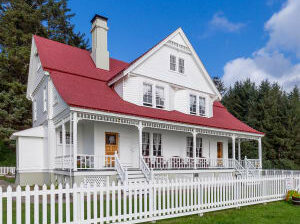
Special Occasions
We coordinate and host a variety of events:
- Special Birthdays and Anniversary Parties
- Engagements/Proposals
- Family Reunions
- Holiday Parties
- Annual Friends' Gatherings
- Business parties and meetings
- Luncheons
- Retreats
- Weddings and Vow Renewals
- Tea Parties
- And more!
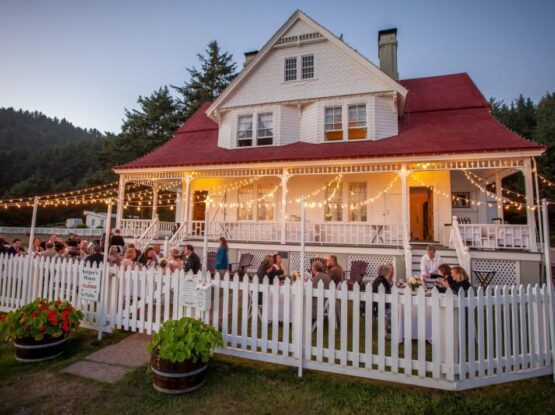
Weddings
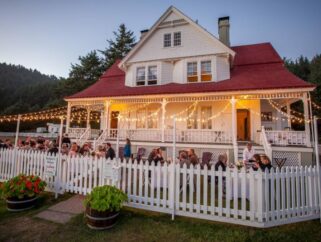
Heceta Lighthouse B&B has provided an unforgettable wedding destination for countless wonderful couples, and we are happy that you are considering us for your special day! The 131-year-old Lighthouse and Keeper’s Home offer sweeping, scenic views of the Oregon Coast, along with an intimate home where loved ones can feel comfortable and relaxed. Despite its considerable popularity for wedding ceremonies, every wedding we have experienced has been as special as each couple. We appreciate each family’s uniqueness and look forward to joining in your celebration!
We have crafted a variety of ceremony packages to fit the different needs and fulfill the wildest dreams of couples who wish for the ease of a fully planned wedding. Wedding packages can be customized for groups up to 150 people, and are offered year-round for groups of 30 or less. A catered reception can also be added to these packages. Here is a link to our Facebook Wedding Album. Please contact our event coordinator, Misty, at celebrations@hecetalighthouse.com. We look forward to hearing from you!

"Misty,
Thank you for making Lindsay and Jeremy’s big event so special. It was wonderful being in the hands of someone who had every detail under control and made it all look effortless.
Many thanks again!
Nathan"
The Details
Weekends in May through October require an agreement to hold the ceremony and catered reception with the whole house rented. A ceremony-only option can be arranged Monday through Thursday from 11:30 to 2:30 PM, when our calendar permits.
Wedding Consulting
The Heceta Lighthouse B&B event team will assist in the successful execution of your wedding day. Including both pre-ceremony and and day-of services like wedding consultation, wedding day facilitations, and assistance with set-up, we provide resources and advice for each phase of your wedding planning. Our preferred vendors are a select and diverse group of professionals, all of whom have proven to be the best in the area. Whether you are looking for flowers, music, or the perfect cake, we will save you considerable time!
The Ceremony
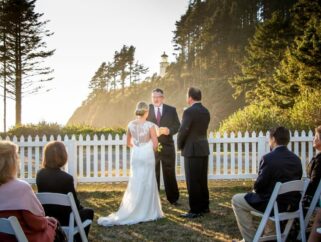
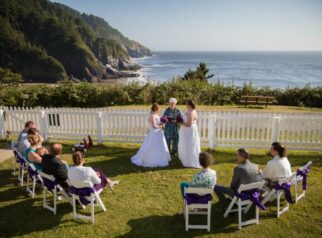
Our historic grounds offer several options for a memorable wedding ceremony. Our sites include the picturesque West Lawn, the grandiose wrap-around front porch, or the intimate South Lawn beneath the setting sun and the lighthouse’s beam. For a sheltered setting, many couples find the ocean-facing parlors or the elegant dining room intimate atmospheres to exchange vows. Special arrangements can be made with Oregon State Parks to have your ceremony at the beach below after Labor Day and before Memorial Weekend, and groups of ten people or less can choose a ceremony next to the Lighthouse. To obtain a permit or ask further questions about wedding ceremonies on the beach or lighthouse tower grounds, email Oregon State Parks at heceta.h.lighthouse@state.or.us or call them at (541) 547-3416.
Beverages
Our regional wine list gathers the best varietals from Oregon, Washington, and California. If you choose to offer beverages off of our list, you are charged per bottle open, which is applied toward the beverage minimum. If you have a preferred beer or wine not included on our list, we are happy to special order it for you! You are welcome to provide your own beer and wine for your event, with corkage fees.
Corkage Fees:
- $25/ 750ml bottle of wine
- $4/ 22oz beer
- $3/16 oz beer
- $2/ 12oz beer
The beverage minimum for 30 people or less for 3 hours is $500 and increases with additional people or additional time. A 25% service charge on all catering and beverages will be applied.
Bed and Breakfast Rooms
Catered wedding and reception reservations require rental of the whole house, which includes 6 rooms, 5 bathrooms, 2 parlors, a dining room, and a guest kitchen. We do not require a two-night stay for a Saturday wedding, but we do highly recommend renting at least a few of the rooms the night before, in order to get an early start on your wedding day. Ceremony-only options between 11:30 AM and 2:30 PM do not require rental of any rooms. The Keeper’s Home can accommodate up to 15 guests for overnight lodging. The rates vary depending on season, day of the week, and are based on double occupancy. The online calendar does not reflect what dates are available for weddings.
Site Fee
Beyond hosting guests at the boutique B&B, a site fee is charged for any event taking place at Heceta Lighthouse Bed & Breakfast. This fee is based on the number of guests attending and the type of event preferred. 3-hour site fees for 30 people or less are already included in the Ceremony Packages.
Wedding and Reception Set Up
The Heceta Lighthouse B&B staff will be responsible for catering set-up and clean-up, and will assist the wedding party with other details. Special decorations, music, and transport services are your personal touch, and may be provided by family or outside vendors.
The Wedding Feast
Heceta Lighthouse B&B offers renowned catering services for those interested in some of the finest cuisine on the Oregon Coast. Along with a talented staff, Head Chef and Heceta Lighthouse B&B Owner Michelle Korgan prepares every wedding feast using only the freshest ingredients handpicked from local farms and artisan purveyors. Michelle’s eclectic mix of regional influences, world traveling, and decades of cooking experience are at your disposal to create the most memorable meal.
Our catering options vary based on seasonality, party size, and catering style.
- Parties of 28 or fewer may choose:
- Plated
- Family-style
- Buffet
- Parties of 29 or more may choose:
- Family-style
- Buffet
Heceta Lighthouse B&B catering is available for parties up to 150 people. Catering prices increase with additional guests, on weekends, and in peak season. Most of our catered meals average $75-$100 per person. Menus and cost vary depending upon the season and your menu choices.
All catering is done exclusively by the B&B onsite, with the exception of wedding cakes, which are made and delivered by nearby specialty bakers, and served by B&B catering staff. A 25% service charge on all catering and services will be applied.
Rental Necessities
All events with 29 or more guests must be held in a clear-sided tent on the West Lawn. This option is available May - October. Any catered event with more than 28 guests will require rental of the items listed below, which we will arrange for you.
Required rentals for parties of more than 30 people:
- Tent
- Side walls
- Tables
- Chairs
- Heater and accessories
- Lighting
- Glassware
- Tablecloths
- Napkins
- Dishes and flatware
Rental Extras:
- Dance floor
- Extra tables for any vendors (band, photographer, DJ)
- Extension cords for lights, music, etc.
- Decor (ex. mirror table toppers)
- Coatrack
- Booster seats or highchairs
- Sound systems
- High-top bistro tables
Cancellation Policy
Room Cancellation Policy: Lodging Fees are due at the time you make the reservation. If you cancel or change your room reservations at any time, there is a $50.00 fee per room. If you cancel or change your reservation within six months of your event, we will refund fees paid if we are able to re-rent the room.
Wedding Site Cancellation Policy: Fees are due at the time you make the reservation. If you cancel or change your wedding date the site/package fee is non-refundable.
Reception Rental Supplies and DJ services: The wedding party agrees to pay 50% of the balance for rentals as a non-refundable deposit on all rental items to secure them for the rental date. Payment in full is due 60 days before the event. If the wedding party cancels event or rentals for the event, the deposit will not be returned. If the wedding party cancels individual items (i.e. DJ, Dance floor, stage) from the rentals list within 60 days of the event, a refund for those items will not be issued.
Catering Cancellation Policy: Catering Fees are due one month prior to the wedding date. If you cancel within one month of the event, the catering fees are not refundable.
"Covid" Policy: If the county, state or federal government is putting limitations on events, catering, or any other service that is provided by Heceta Lighthouse B&B at the time of the client's event, changes to this contract and plan for the client's event may need to occur. This could include, but is not limited to, social distancing, limiting party size, and style of food service. Heceta Lighthouse B&B, the client, and all their guests are expected to abide by all regulations set forth by any applicable government agency.
If abiding by these regulations requires additional services (such as a larger tent, more tables, or more staff, etc.) the client will be responsible for any additional costs.
If such conditions arise that it is not possible to execute the event on the date reserved due to government restrictions, the client will be permitted to reschedule the event within 1 year of the original date, based upon availability, without losing their deposit. Rescheduling may incur additional fees if the new date selected is at a higher rate.
All cancellation policies stated above will apply.
Small Ceremony Packages
All packages and site use include chairs with set-up and removal, a room for personal preparation, coffee, tea, water, and a bathroom on the second floor of the B&B for wedding guest use.
All packages can be customized to suit specific needs and any number of people.
Fee Schedule and Cancellation Policy
Payment in full is needed to secure your reservation. By submitting payment, the client agrees to the terms of Heceta Lighthouse B&B’s cancellation policy. If you cancel or change your wedding date or package selection, the site use/package fee is non-refundable.
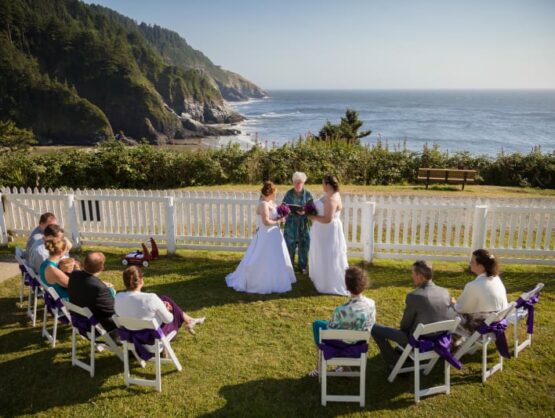
2025: $1500 2026: $1600
- 2 hour site use from 12pm - 2pm
- 2-4 people
- Includes officiant and witnesses, if needed
2025: 2-14 people $3345, 15-30 people $3495
2026: 2-14 people $4005, 15-30 people $4430
- Premium Bridal Bouquet
- Matching Boutonnière
- Officiant
- Photographer – Shoot time of 3 hours
- 11 x 14 Wedding Photo - unframed
- Wedding Cake
- Sparkling wine toast for wedding guests
- Gift Certificate from Ona Restaurant & Lounge - $50/$100
2025: 2-14 people $3175, 15-30 people $3325
2026: 2-14 people $3828, 15-30 people $4100
- Premium Bridal Bouquet
- Matching Boutonnière
- Officiant
- Photographer – Shoot time of 3 hours
- 11 x 14 Wedding Photo - unframed
- Wedding Cake
2025: 2-14 people $3000, 15-30 people $3250
2026: 2-14 people $3590, 15-30 people $3890
- Premium Bridal Bouquet
- Matching Boutonnière
- Officiant
- Photographer – Shoot time of 3 hours
- 11 x 14 Wedding Photo - unframed
2025: 2-14 people $2400, 15-30 people $2700
2026: 2-14 people $2840, 15-30 people $3190
- Premium Bridal Bouquet
- Matching Boutonnière
- Officiant
To utilize the use of our memorable site, we will include chairs with set-up and removal, a room for personal preparation, and a bathroom on the second floor of the B&B for wedding guest use. Up to 30 people for 3 hours: $2000
Additional time is available, but requires the rental of the whole house for the evening. Parties larger than 30 people will be hosted in a clear-sided tent on the West Lawn. Rental and set up of the tent is an Additional cost and based on the number of people.
Contact Celebrations@HecetaLighthouse.com for details.
Sample Menus
Heceta Lighthouse B&B will work with you on a customized menu for your event. Below are just a few examples of menus from this last summer.
"Wow...That's all I can say about the AMAZING menu you created for our Sept 16th wedding at the B&B. Our guests were blown away and many commented that it was the best food they have ever had at a wedding, and we must agree. I still dream of the curried scallops and crave them! Thank you so much to everyone involved in our mouth watering meal! Many thanks, Jenn & Jeannine"
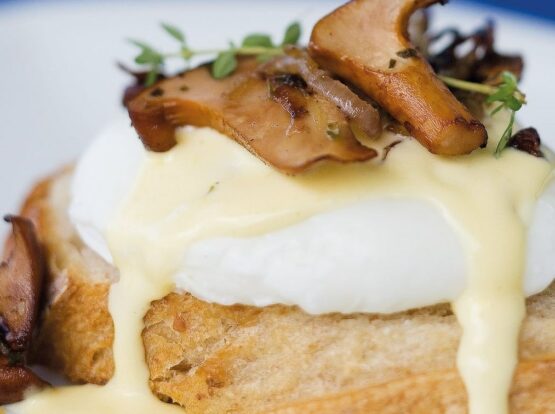
Appetizers
Oregon Artisan Cheeses
Face Rock Cheddar, Willamette Valley Farmstead, Rogue
Creamery Blue, rice crackers, spiced nuts, wildflower honey,
seasonal fruit
Chef's Canapés
Passed hors d'oeuvres including Oregon Dungeness crab cakes,
a vegetarian (gluten free), and a meat component left to the
creativity of chef and seasonal ingredients
Salad
Flowering Beet Salad
Arugula, sherry vinaigrette, herbed chevre, candied walnuts,
pickled fennel, Balsamic gastrique
Entrees
Cedar Plank Chinook Salmon
With chermoula
Grilled Draper Valley Chicken Breast
With apricot & mustard seed chutney
Gathering Together Farm Vegetable Mélange
Heirloom tomatoes, peppers, sweet corn, light basil vinaigrette
Saffron Rice Pilaf
With pistachio, mushroom, fresh herbs
Appetizers
Oregon Artisan Cheeses
Face Rock Cheddar, Willamette Valley Farmstead, Rogue
Creamery Blue, rice crackers, spiced nuts, wildflower honey,
seasonal fruit
Chef's Canapés
Three passed hors d'oeuvres including a vegetarian mushroom,
and seafood components left to the creativity of chef
and seasonal ingredients
Salad
Pacific Salad Rolls
Marinated tofu, fresh basil, mint, peanut sauce, cucumber relish
Soup
Vegetarian Pho Consommé
With shitake dumplings
Entrees
Seared Ahi Tuna
On mixed Asian greens with fried garlic
Flat Iron Steak
Medium rare, with chermoula
House-made Yakisoba
Baby spinach, shitake mushrooms, sesame, scallions
Appetizers
Oregon Artisan Cheeses
River's Edge Chèvre, Rogue Creamery Blue, Face Rock Cheddar,
Willamette Valley Farmstead, water crackers, artisan sourdough,
spiced nuts, wildflower honey
Prosciutto Wrapped Grilled Peaches
With Balsamic gastrique
Chef's Canapés
An assortment of passed hors d'oeuvres including vegetarian,
seafood and savory components left to the creativity of chef
and seasonal ingredients
Salad
Heceta Head Caesar
Romaine hearts, Parmesano Reggiano, crouton
Entrees
Certifed Angus Flat Iron Steak
Grilled medium rare with chimichurri
Seafood Sofrito
Penn Cove mussels, Manilla clams, wild Mexican prawns, and Pacific halibut, smoky Spanish tomato sauce
Tagliolini
Fresh egg ribbons pasta, fresh herbs, sea salt
Gathering Together Farm Roasted Vegetables
Selected from the farmer’s market for your table
Portland French Bakery Artisan Sourdough
Appetizers
Oregon Artisan Cheeses
River's Edge Chèvre, Rogue Creamery Blue, Face Rock Cheddar,
Willamette Valley Farmstead, water crackers, artisan sourdough,
spiced nuts, wildflower honey
Seasonal Fruit
With White Chocolate Frangelico Cream Sauce
Chef's Canapés
Passed hors d'oeuvres including a seafood, vegetarian, and meat
component left to the creativity of chef and seasonal ingredients
Salad
Flowering Summer Salad
Mixed greens, cucumber, grape tomato, carrots, edible flowers, blood orange vinaigrette
Entrees
Grilled CAB Flat Iron Steak
With chimichurri
Seafood Paella
Manilla clams, Penn Cove mussels, wild Mexican prawns, halibut,
sweet corn
Tagliolini
Fresh egg ribbons pasta, fresh herbs, sea salt
Gathering Together Farm Vegetable Mélange
Heirloom tomatoes, peppers, sweet corn, light basil vinaigrette
Roasted Fingerlings
With fresh herbs, EVOO, sea salt
Appetizers
Artisan Cheeses
Manchego, Face Rock Cheddar, Willamette Valley Farmstead,
River's Edge Chèvre, rice crackers, spiced nuts, quince paste,
wildflower honey
Alder Smoked Bacon Wrapped Scallops
With Apricot sauce
Chef's Canapés
An assortment of passed hors d'oeuvres including vegetarian,
seafood and savory components left to the creativity of chef
and seasonal ingredients
Salad
Beet Salad
Arugula, sherry vinaigrette, candied walnuts, pickled fennel,
Balsamic vinaigrette, Rogue blue cheese
Entrees
Moroccan Lamb Tagine
With Preserved lemon and prunes
Seafood Paella
Oregon Dungeness crab, weathervane scallop, Manilla clams, Penn Cove mussels, halibut and chicken sausage
Saffron Rice
Roasted Vegetables
Christmas
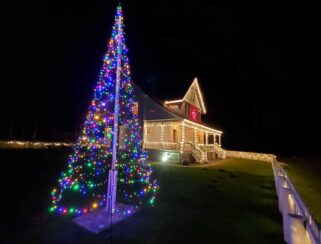
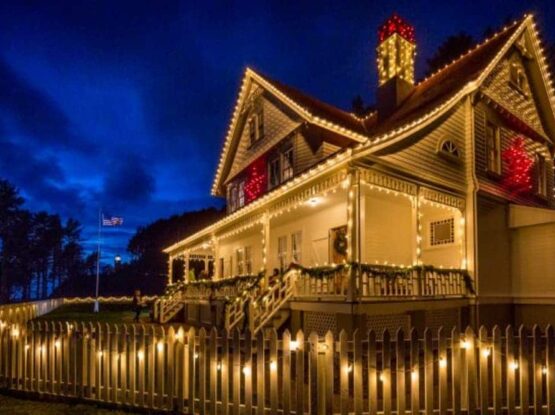
Celebrate the 28th Anniversary of Victorian Christmas Open Houses! Join us to make lasting memories with loved ones. Doors will be open to the public from 4-7 pm December 14th & 15th and 21st & 22nd, 2024. Enjoy the majesty of the beautifully decorated Keeper’s House while listening to live music from generous local performers, enjoying refreshments, and visiting with Santa!
December 14 sponsor - Florence Dental Clinic
Musicians - SLUGS, HWY 101 Jazz Quartet, Christmas Keepers
December 15 sponsor - Yachats Chamber of Commerce
Musicians - Sea Strings, Cello Forte, Malcolm
December 21 sponsor - Yachats Presbyterian Church
Musicians - Lifted, Parlor Players, James Hale
December 22 sponsor - Sweet Homes Vacation Getaways
Musicians - Takako Klampe, Ron Stanley
Heceta Lighthouse Gift Shop will be open for those special gifts, and why not treat yourself too while you are there! Walk up to the lighthouse after dark, so bring your flashlight and jacket. Just follow the light!
Parking is at Heceta Head Lighthouse State Scenic View for $5 per vehicle to support the State Park (cards only). A free shuttle offered by Three Rivers Casino and Best Oregon Tours is provided from the parking lot to the Keeper's Home. Admission to the Keeper's Home is free, but donations are greatly appreciated.
Many thanks to all the volunteers and sponsors who make these nights possible!
Lightstation Birthday Party
March 30
Heceta Head Lightstation celebrates it's birthday March 30th from 11 am-3 pm! The community is invited to celebrate at the Lightstation which has a scenic walking trail from the beach to the Keeper’s Home, Gift Shop, and lighthouse tower. This family-friendly free event takes place at the Heceta Lighthouse Bed & Breakfast in the Keeper's Home.
Food and beverages are available. Live musicians will play. Local agency representatives will be present to talk about the outstanding natural features of the area, as well as volunteers from the Heceta Lighthouse Interpretive Center at the Keeper's Home and Oregon State Parks volunteers at the lighthouse tower. The Heceta Lighthouse Gift Shop will be open, so stop in!
The park is located off of Hwy 101 just 13 miles north of Florence. Parking is available at the Heceta Head Lighthouse State Scenic Viewpoint, and parking is $10 per vehicle.
For more information contact Heceta Lighthouse B&B at (866) 547-3696 or keepers@hecetalighthouse.com